December 18 , 2025
Supreme Court Upholds Consortium Member’s Right to Invoke Arbitration
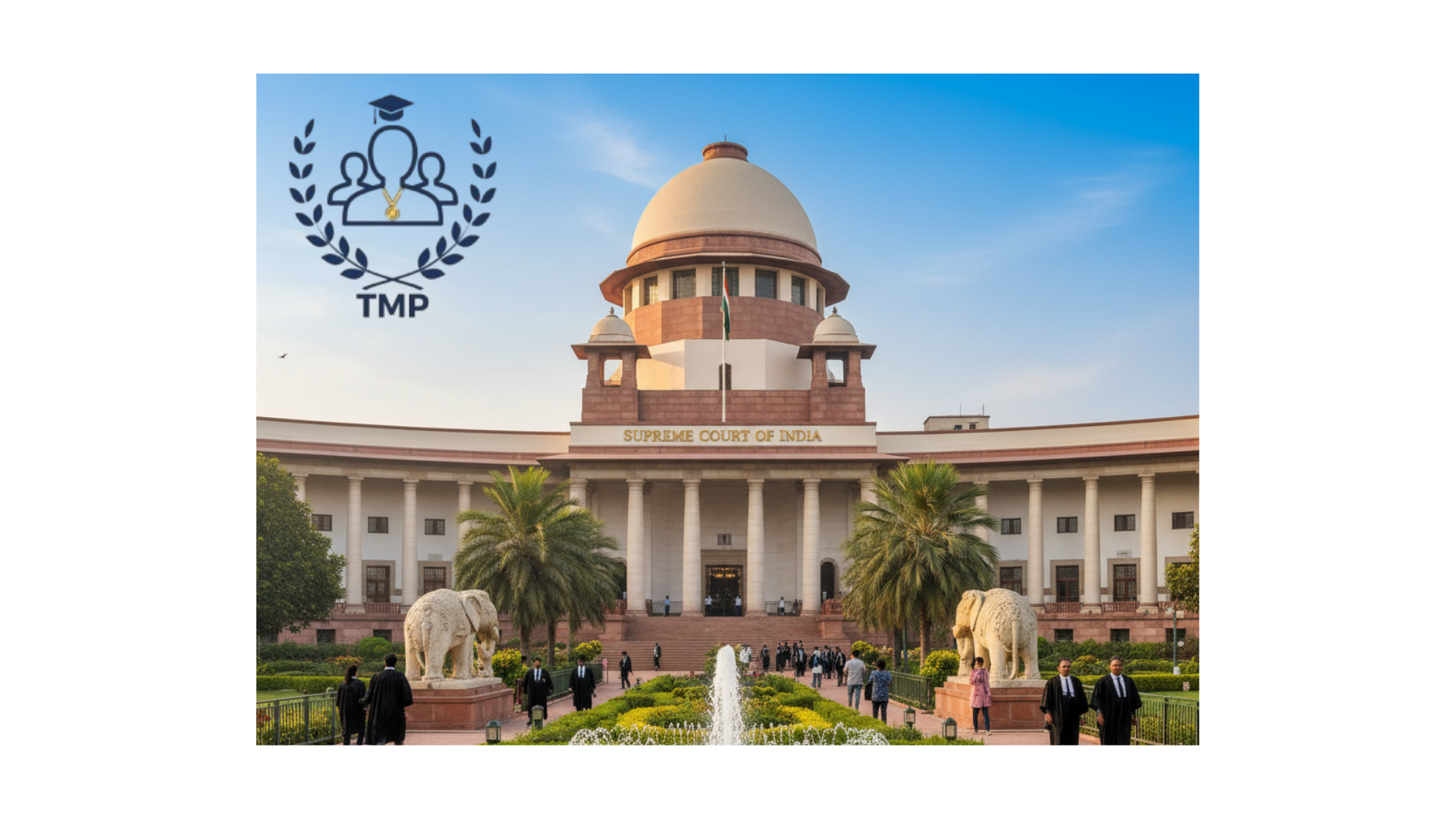
The Supreme Court upheld the constitution of an arbitral tribunal on an application filed by an individual consortium member, holding that at the Section 11 stage the court’s inquiry is limited to the prima facie existence of an arbitration agreement. Objections regarding whether a single consortium member could invoke arbitration, the effect of insolvency, and issues of authority and maintainability were held to fall within the arbitral tribunal’s jurisdiction under Section 16. Reaffirming minimal judicial intervention, the Court dismissed the appeals and left all substantive objections open for the tribunal’s determination.
Legal Issue
The principal issue before the Supreme Court was whether an individual member of a consortium could invoke the arbitration clause and seek appointment of an arbitral tribunal under Section 11(6) of the Arbitration and Conciliation Act, 1996, or whether such invocation could be made only by the consortium acting jointly. The Court also examined the scope of judicial scrutiny at the Section 11 stage, particularly in light of Section 11(6-A) and the doctrine of kompetenz-kompetenz.
Brief Facts
APGENCO floated a tender for an EPC contract for works at the Rayalaseema Thermal Power Plant. A consortium comprising Tecpro Systems Ltd., VA Tech Wabag Ltd., and Gammon India Ltd. was constituted, with Tecpro as the lead member. The consortium was awarded the contract, and purchase orders were issued incorporating the General Conditions of Contract, including Clause 22.2, which provided for arbitration.
During execution, Tecpro faced financial distress and ceased to act as the lead member. VA Tech Wabag assumed the lead role, and subsequently Tecpro entered Corporate Insolvency Resolution Process followed by liquidation. Disputes arose regarding delays and alleged breaches. Tecpro, in its individual capacity, issued notices invoking arbitration and sought appointment of an arbitral tribunal. APGENCO objected, contending that the arbitration agreement existed only between APGENCO and the consortium as a collective entity, and not with individual members.
The High Court of Telangana, exercising jurisdiction under Section 11(6), constituted an arbitral tribunal on a prima facie view. Aggrieved, APGENCO and VA Tech Wabag approached the Supreme Court.
Court’s Analysis
The Supreme Court undertook an extensive analysis of the statutory framework governing Section 11, emphasizing that after the introduction of Section 11(6-A), the jurisdiction of the referral court is strictly confined to examining the prima facie existence of an arbitration agreement. The Court reiterated that issues relating to capacity, authority, maintainability, and arbitrability fall within the domain of the arbitral tribunal under Section 16.
Addressing the objection that an individual consortium member lacked capacity to invoke arbitration, the Court held that this question cannot be conclusively decided at the referral stage. Whether the consortium continued to exist, whether consent of other members was necessary, and whether an individual member qualified as a “party” to the arbitration agreement are matters requiring detailed factual and contractual examination, which the arbitral tribunal alone is competent to undertake.
Relying on precedents such as Duro Felguera, Cox & Kings, and the Constitution Bench decision in Interplay between Arbitration Act and Stamp Act, the Court stressed the principle of minimal judicial intervention. The referral court must avoid conducting a “mini-trial” and must leave substantive jurisdictional objections to be adjudicated by the arbitral tribunal.
The Court also noted that in disputes arising from the same contractual framework after bifurcation of the States, an arbitral tribunal had already been constituted earlier by the Supreme Court, and similar objections were examined by the tribunal itself.
Judgment
The Supreme Court upheld the order of the High Court constituting the arbitral tribunal. It held that once the High Court was satisfied about the prima facie existence of an arbitration agreement, it was justified in referring the dispute to arbitration. All objections regarding the capacity of an individual consortium member to invoke arbitration, maintainability of claims, and effect of insolvency were left open to be decided by the arbitral tribunal under Section 16.
Accordingly, both civil appeals were dismissed, with no order as to costs.
Access the official judgement/order here
Case Title
M/s Andhra Pradesh Power Generation Corporation Limited (APGENCO) vs. M/s Tecpro Systems Limited & Ors.
Court
Supreme Court of India
Case Number
SLP (C) No. 8998 of 2023
with
(Arising out of SLP (C) No. 13200 of 2023)
Judgment Delivered
17 December 2025